BLOG
AI in Therapy: What Californians Need to Know in 2026
A psychiatrist can help you build a treatment plan for ADHD.

June 27, 2025
June 27, 2025


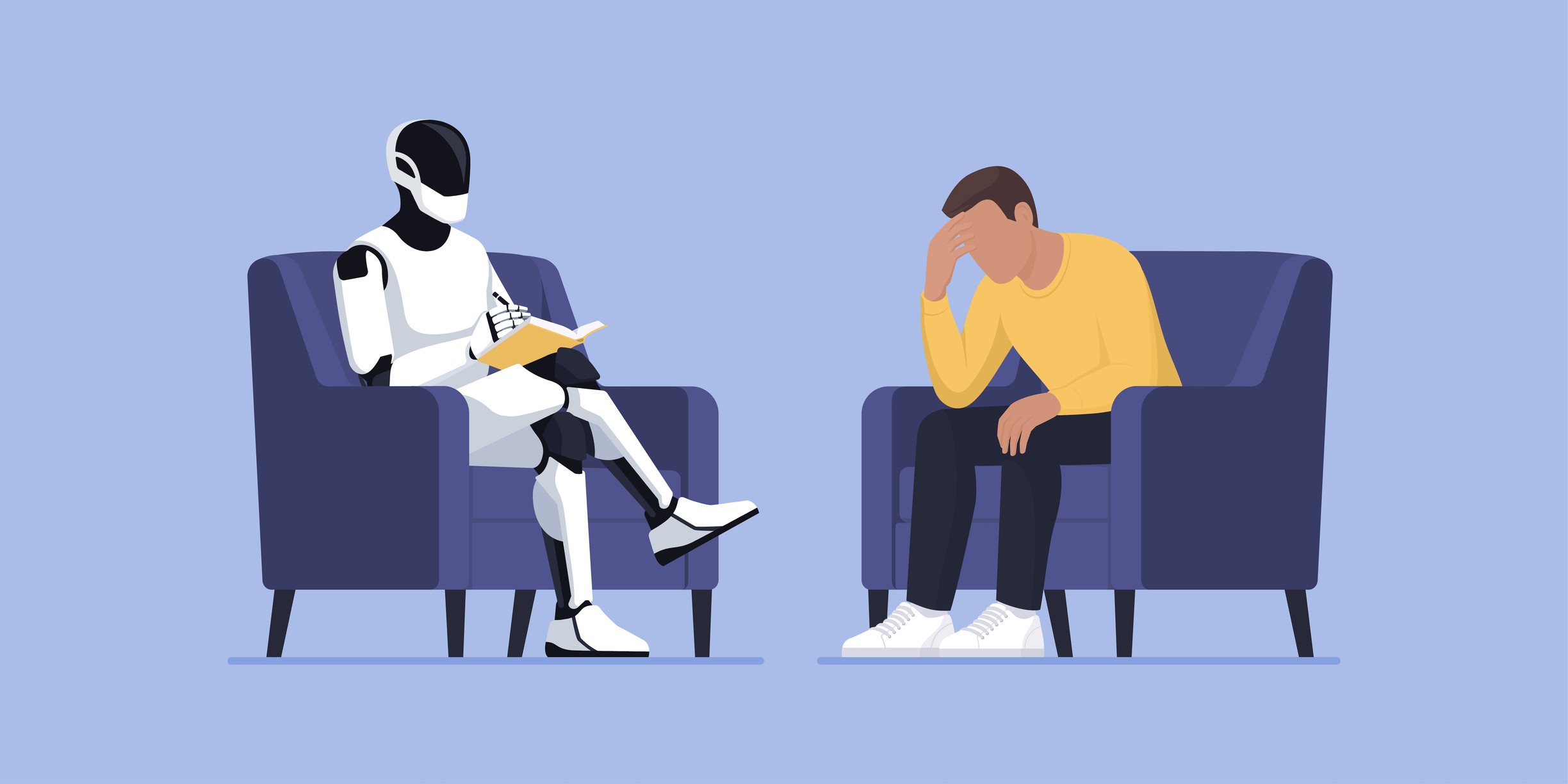
Artificial intelligence is changing how we work, communicate, and access information—and mental health care is no exception. If you've seen ads for AI therapy apps, chatbots promising 24/7 emotional support, or algorithms that claim to diagnose mental health conditions, you might be wondering what role AI should play in your mental health journey.
The conversation around AI and therapy is particularly relevant for Californians, where tech innovation meets a mental health system already stretched thin by high demand and limited access. Understanding what AI can and can't do in therapy helps you make informed decisions about your mental health care.
What AI in Therapy Actually Means
AI in mental health exists on a spectrum. At one end, you have simple chatbots that provide scripted responses to common concerns. At the other end, there are sophisticated systems that analyze speech patterns, track mood over time, or assist licensed therapists with administrative tasks.
Some AI tools act as digital companions, offering basic emotional support through text conversations. Others function as mental health screening tools, asking questions to identify potential concerns. A growing number of apps use AI to deliver cognitive behavioral therapy exercises, meditation guidance, or mood tracking.
What's important to understand is that AI in therapy isn't one thing—it's a range of technologies with different purposes, capabilities, and limitations. A meditation app using AI to personalize your practice is very different from a chatbot claiming to replace human therapy.
Where AI Can Actually Be Helpful
AI tools do offer some genuine benefits for mental health support, particularly in areas where human therapists aren't always available or needed.
Immediate accessibility represents one of AI's strongest advantages. If you're experiencing anxiety at 2 a.m. or need grounding techniques during a stressful moment, AI-powered apps can provide instant resources. This isn't therapy, but it can be useful crisis support when human help isn't immediately available.
Consistent practice support between therapy sessions can help reinforce the work you're doing with a human therapist. AI apps can send reminders to practice breathing exercises, prompt journaling, or track mood patterns that you can discuss in your next session. Think of these as homework helpers rather than replacements for therapy.
Lower barriers to initial help matter for people who might not otherwise seek support. Some individuals feel more comfortable opening up to an AI interface initially, without the vulnerability of human judgment. If an AI tool helps someone recognize they need professional help and connects them to a licensed therapist, it's served a valuable purpose.
Data tracking and pattern recognition can identify trends that might not be obvious to you or your therapist. An app that tracks your mood, sleep, and activities might reveal that your anxiety spikes on days when you skip exercise, or that your depression worsens during certain times of the month. These insights can inform more effective treatment.
The Critical Limitations of AI Therapy
Despite the potential benefits, AI has significant limitations that matter deeply when it comes to mental health care.
AI cannot truly understand your experience. The most sophisticated language model can generate empathetic-sounding responses, but it doesn't actually understand grief, trauma, or joy. It processes patterns in data and produces statistically likely responses. When you're working through something as personal as losing a loved one, navigating a difficult relationship, or processing childhood trauma, that distinction matters profoundly.
Context and nuance get lost. Human therapists read body language, notice what you're not saying, and understand how cultural background, life circumstances, and individual history shape your mental health. They adjust their approach based on subtle cues that AI systems simply cannot perceive. A statement like "I'm fine" means something entirely different depending on tone, context, and the relationship between therapist and client.
AI cannot handle crises appropriately. If you're in a genuine crisis, experiencing suicidal thoughts, or dealing with acute mental health emergencies, AI tools are not equipped to provide appropriate intervention. They can't assess risk the way a trained clinician can, and they can't connect you with emergency resources as effectively as human support systems.
No therapeutic relationship exists. The relationship between therapist and client isn't just a nice feature of therapy—it's often the most important healing factor. Trust, safety, being truly seen and understood by another person—these aren't extras that AI might someday replicate. They're central to therapeutic change.
Privacy and data concerns deserve serious consideration. Many AI therapy apps collect extensive data about your mental health, and not all are subject to the same privacy protections as licensed therapists. In California, healthcare privacy laws are relatively strong, but AI companies don't always fall under these protections. Your conversations with an AI might not have the same confidentiality guarantees as sessions with a licensed therapist.
What California's Mental Health Professionals Are Seeing
Therapists across California report both opportunities and concerns around AI in mental health care. Many see AI tools as potentially useful supplements to therapy—helping with appointment scheduling, providing between-session support, or offering psychoeducational resources. Some therapists use AI to help with clinical note-taking, freeing up more time for actual client care.
However, mental health professionals also see clients who've tried AI therapy apps and found them inadequate for addressing real mental health conditions. Individuals dealing with depression often report that AI responses feel hollow when they're in the depths of despair. Couples working through relationship challenges find that AI completely misses the relational dynamics that a skilled couples therapist would immediately recognize.
There's also concern about AI tools giving inappropriate advice. Without the clinical judgment of a trained therapist, AI might recommend strategies that aren't suitable for certain conditions or that could even be harmful in specific contexts. A suggestion that works for general stress might be counterproductive for someone with trauma or a specific mental health diagnosis.
How to Use AI Tools Responsibly
If you're considering using AI for mental health support, here are some guidelines to do so safely:
Use AI as a supplement, not a replacement. AI tools work best when they complement professional care rather than substitute for it. Think of them as mental health education or self-help resources, similar to reading a psychology book or using a meditation app—potentially helpful, but not therapy.
Be selective about which tools you use. Look for AI apps developed by reputable organizations, ideally with input from licensed mental health professionals. Check privacy policies carefully. Avoid tools that make unrealistic promises about curing mental health conditions or replacing professional treatment.
Recognize when you need human support. If you're dealing with significant mental health symptoms, trauma, relationship problems, or anything that interferes with your daily functioning, seek care from a licensed therapist. AI might help you cope between sessions, but it shouldn't be your only source of support.
Protect your privacy. Be cautious about how much personal information you share with AI tools. Assume that data might not be as protected as information shared with a licensed therapist under healthcare privacy laws.
Monitor the impact on your wellbeing. If using an AI tool makes you feel worse, more anxious, or more isolated, stop using it. The measure of any mental health resource—AI or otherwise—is whether it genuinely helps your wellbeing.
What Real Therapy Offers That AI Cannot
When comparing AI tools to working with a licensed therapist, several crucial differences become clear.
Human therapists adapt to you uniquely. They don't just apply standardized techniques—they get to know you as an individual and tailor treatment to your specific needs, values, and circumstances. They notice when an approach isn't working and adjust accordingly.
Therapists hold space for difficult emotions. They can sit with your pain, anger, or confusion without trying to fix it immediately. Sometimes, the most therapeutic thing is simply being heard and understood by another person who can tolerate your emotional experience.
The therapeutic relationship itself is healing. Many people find that the experience of being fully accepted, having someone reliably show up for them, and developing trust with another person becomes transformative in itself—often helping heal relational wounds from the past.
Clinical expertise matters for complex situations. Families navigating difficult dynamics need someone who understands family systems theory. People processing trauma need therapists trained in trauma-specific approaches. Those managing severe mental health conditions need clinicians who can assess, diagnose, and provide appropriate Family Therapy.
Therapists work within ethical and legal frameworks. Licensed therapists in California operate under professional standards, ethical guidelines, and legal protections for clients. They're accountable to licensing boards and required to maintain confidentiality, obtain informed consent, and provide competent care.
Making Informed Choices About Your Mental Health Care
As AI becomes more prevalent in mental health, you'll likely encounter it in various forms. Some AI tools will be genuinely useful—offering convenient access to breathing exercises, tracking your mood patterns, or providing psychoeducation about mental health. Others will overpromise and underdeliver.
The key is approaching AI tools with appropriate expectations. They can be helpful resources in the larger ecosystem of mental health support, but they're not substitutes for the nuanced, relational, clinically informed work that happens in therapy with a skilled human professional.
For Californians navigating mental health challenges—whether dealing with stress, relationship issues, trauma, or diagnosed mental health conditions—working with a licensed therapist remains the gold standard of care. AI might supplement that work, but it can't replace the depth of understanding, clinical expertise, and human connection that effective therapy provides.
At Family Time Centers, our licensed therapists bring not just clinical training but genuine human presence to their work with clients across California. We understand that while technology can enhance certain aspects of mental health care, the core of healing happens in authentic human connection. If you're ready to work with a therapist who will truly see you, understand your unique situation, and provide personalized care, we're here to help. Call us at (818) 821-6012 or visit our website to get started with therapy that goes beyond what any algorithm can offer.

Artificial intelligence is changing how we work, communicate, and access information—and mental health care is no exception. If you've seen ads for AI therapy apps, chatbots promising 24/7 emotional support, or algorithms that claim to diagnose mental health conditions, you might be wondering what role AI should play in your mental health journey.
The conversation around AI and therapy is particularly relevant for Californians, where tech innovation meets a mental health system already stretched thin by high demand and limited access. Understanding what AI can and can't do in therapy helps you make informed decisions about your mental health care.
What AI in Therapy Actually Means
AI in mental health exists on a spectrum. At one end, you have simple chatbots that provide scripted responses to common concerns. At the other end, there are sophisticated systems that analyze speech patterns, track mood over time, or assist licensed therapists with administrative tasks.
Some AI tools act as digital companions, offering basic emotional support through text conversations. Others function as mental health screening tools, asking questions to identify potential concerns. A growing number of apps use AI to deliver cognitive behavioral therapy exercises, meditation guidance, or mood tracking.
What's important to understand is that AI in therapy isn't one thing—it's a range of technologies with different purposes, capabilities, and limitations. A meditation app using AI to personalize your practice is very different from a chatbot claiming to replace human therapy.
Where AI Can Actually Be Helpful
AI tools do offer some genuine benefits for mental health support, particularly in areas where human therapists aren't always available or needed.
Immediate accessibility represents one of AI's strongest advantages. If you're experiencing anxiety at 2 a.m. or need grounding techniques during a stressful moment, AI-powered apps can provide instant resources. This isn't therapy, but it can be useful crisis support when human help isn't immediately available.
Consistent practice support between therapy sessions can help reinforce the work you're doing with a human therapist. AI apps can send reminders to practice breathing exercises, prompt journaling, or track mood patterns that you can discuss in your next session. Think of these as homework helpers rather than replacements for therapy.
Lower barriers to initial help matter for people who might not otherwise seek support. Some individuals feel more comfortable opening up to an AI interface initially, without the vulnerability of human judgment. If an AI tool helps someone recognize they need professional help and connects them to a licensed therapist, it's served a valuable purpose.
Data tracking and pattern recognition can identify trends that might not be obvious to you or your therapist. An app that tracks your mood, sleep, and activities might reveal that your anxiety spikes on days when you skip exercise, or that your depression worsens during certain times of the month. These insights can inform more effective treatment.
The Critical Limitations of AI Therapy
Despite the potential benefits, AI has significant limitations that matter deeply when it comes to mental health care.
AI cannot truly understand your experience. The most sophisticated language model can generate empathetic-sounding responses, but it doesn't actually understand grief, trauma, or joy. It processes patterns in data and produces statistically likely responses. When you're working through something as personal as losing a loved one, navigating a difficult relationship, or processing childhood trauma, that distinction matters profoundly.
Context and nuance get lost. Human therapists read body language, notice what you're not saying, and understand how cultural background, life circumstances, and individual history shape your mental health. They adjust their approach based on subtle cues that AI systems simply cannot perceive. A statement like "I'm fine" means something entirely different depending on tone, context, and the relationship between therapist and client.
AI cannot handle crises appropriately. If you're in a genuine crisis, experiencing suicidal thoughts, or dealing with acute mental health emergencies, AI tools are not equipped to provide appropriate intervention. They can't assess risk the way a trained clinician can, and they can't connect you with emergency resources as effectively as human support systems.
No therapeutic relationship exists. The relationship between therapist and client isn't just a nice feature of therapy—it's often the most important healing factor. Trust, safety, being truly seen and understood by another person—these aren't extras that AI might someday replicate. They're central to therapeutic change.
Privacy and data concerns deserve serious consideration. Many AI therapy apps collect extensive data about your mental health, and not all are subject to the same privacy protections as licensed therapists. In California, healthcare privacy laws are relatively strong, but AI companies don't always fall under these protections. Your conversations with an AI might not have the same confidentiality guarantees as sessions with a licensed therapist.
What California's Mental Health Professionals Are Seeing
Therapists across California report both opportunities and concerns around AI in mental health care. Many see AI tools as potentially useful supplements to therapy—helping with appointment scheduling, providing between-session support, or offering psychoeducational resources. Some therapists use AI to help with clinical note-taking, freeing up more time for actual client care.
However, mental health professionals also see clients who've tried AI therapy apps and found them inadequate for addressing real mental health conditions. Individuals dealing with depression often report that AI responses feel hollow when they're in the depths of despair. Couples working through relationship challenges find that AI completely misses the relational dynamics that a skilled couples therapist would immediately recognize.
There's also concern about AI tools giving inappropriate advice. Without the clinical judgment of a trained therapist, AI might recommend strategies that aren't suitable for certain conditions or that could even be harmful in specific contexts. A suggestion that works for general stress might be counterproductive for someone with trauma or a specific mental health diagnosis.
How to Use AI Tools Responsibly
If you're considering using AI for mental health support, here are some guidelines to do so safely:
Use AI as a supplement, not a replacement. AI tools work best when they complement professional care rather than substitute for it. Think of them as mental health education or self-help resources, similar to reading a psychology book or using a meditation app—potentially helpful, but not therapy.
Be selective about which tools you use. Look for AI apps developed by reputable organizations, ideally with input from licensed mental health professionals. Check privacy policies carefully. Avoid tools that make unrealistic promises about curing mental health conditions or replacing professional treatment.
Recognize when you need human support. If you're dealing with significant mental health symptoms, trauma, relationship problems, or anything that interferes with your daily functioning, seek care from a licensed therapist. AI might help you cope between sessions, but it shouldn't be your only source of support.
Protect your privacy. Be cautious about how much personal information you share with AI tools. Assume that data might not be as protected as information shared with a licensed therapist under healthcare privacy laws.
Monitor the impact on your wellbeing. If using an AI tool makes you feel worse, more anxious, or more isolated, stop using it. The measure of any mental health resource—AI or otherwise—is whether it genuinely helps your wellbeing.
What Real Therapy Offers That AI Cannot
When comparing AI tools to working with a licensed therapist, several crucial differences become clear.
Human therapists adapt to you uniquely. They don't just apply standardized techniques—they get to know you as an individual and tailor treatment to your specific needs, values, and circumstances. They notice when an approach isn't working and adjust accordingly.
Therapists hold space for difficult emotions. They can sit with your pain, anger, or confusion without trying to fix it immediately. Sometimes, the most therapeutic thing is simply being heard and understood by another person who can tolerate your emotional experience.
The therapeutic relationship itself is healing. Many people find that the experience of being fully accepted, having someone reliably show up for them, and developing trust with another person becomes transformative in itself—often helping heal relational wounds from the past.
Clinical expertise matters for complex situations. Families navigating difficult dynamics need someone who understands family systems theory. People processing trauma need therapists trained in trauma-specific approaches. Those managing severe mental health conditions need clinicians who can assess, diagnose, and provide appropriate Family Therapy.
Therapists work within ethical and legal frameworks. Licensed therapists in California operate under professional standards, ethical guidelines, and legal protections for clients. They're accountable to licensing boards and required to maintain confidentiality, obtain informed consent, and provide competent care.
Making Informed Choices About Your Mental Health Care
As AI becomes more prevalent in mental health, you'll likely encounter it in various forms. Some AI tools will be genuinely useful—offering convenient access to breathing exercises, tracking your mood patterns, or providing psychoeducation about mental health. Others will overpromise and underdeliver.
The key is approaching AI tools with appropriate expectations. They can be helpful resources in the larger ecosystem of mental health support, but they're not substitutes for the nuanced, relational, clinically informed work that happens in therapy with a skilled human professional.
For Californians navigating mental health challenges—whether dealing with stress, relationship issues, trauma, or diagnosed mental health conditions—working with a licensed therapist remains the gold standard of care. AI might supplement that work, but it can't replace the depth of understanding, clinical expertise, and human connection that effective therapy provides.
At Family Time Centers, our licensed therapists bring not just clinical training but genuine human presence to their work with clients across California. We understand that while technology can enhance certain aspects of mental health care, the core of healing happens in authentic human connection. If you're ready to work with a therapist who will truly see you, understand your unique situation, and provide personalized care, we're here to help. Call us at (818) 821-6012 or visit our website to get started with therapy that goes beyond what any algorithm can offer.
Find care with FamilyTime Center
Finding the right therapist can feel overwhelming, especially when you're already struggling with the challenges that brought you here. You don't have to figure this out alone—our experienced team of California-licensed therapists specializes in the exact issues you're facing. Whether you're dealing with anxiety, depression, trauma, or life transitions, we're here to provide the compassionate, evidence-based care you deserve. Take that brave first step today by scheduling a consultation, and let us help you find the path to healing and growth.
If you’re feeling unsure how to talk about ADHD with your psychiatrist, you’re not alone. Plenty of reasons make this topic potentially tough to discuss. Fortunately, you can do some things to make this conversation a little easier. That includes reflecting on your symptoms, asking questions, and keeping an open mind throughout the process.
More to read

Not Sure If We're the Right Fit?
Take Our 3-Minute Quiz
Quick & Confidential Assessment
Find out in just 3 minutes if our approach matches your needs and lifestyle.
Zero Pressure, Zero Commitment
Get personalized recommendations with no obligation to book anything.
Not Sure If We're the Right Fit?
Take Our 3-Minute Quiz
Quick & Confidential Assessment
Find out in just 3 minutes if our approach matches your needs and lifestyle.
Zero Pressure, Zero Commitment
Get personalized recommendations with no obligation to book anything.
Not Sure If We're the Right Fit?
Take Our 3-Minute Quiz
Quick & Confidential Assessment
Find out in just 3 minutes if our approach matches your needs and lifestyle.
Zero Pressure, Zero Commitment
Get personalized recommendations with no obligation to book anything.
Join FamilyTime's newsletter
Receive expert advice, coping strategies, and mental wellness resources from our licensed California therapists - delivered weekly.
By submitting your email, you are consenting to receive emails from FamilyTime Center and accepting the terms.
By conditon
12501 Chandler Blvd, Suite 102
Valley Village, CA 91607
Phone: (818) 821-6012
Hours: Mon–Fri 9:00–19:00, Sat 10:00–14:00
✉️ Email | 📞 Call Now | 📍 View on Google Maps


© 2025 Copyright FamilyTime Center. All rights reserved.
Join FamilyTime's newsletter
Receive expert advice, coping strategies, and mental wellness resources from our licensed California therapists - delivered weekly.
By submitting your email, you are consenting to receive emails from FamilyTime Center and accepting the terms.
Find care
By conditon
Types of care
Our approaches
By region
Legal pages
12501 Chandler Blvd, Suite 102
Valley Village, CA 91607
Phone: (818) 821-6012
Hours: Mon–Fri 9:00–19:00, Sat 10:00–14:00
✉️ Email | 📞 Call Now | 📍 View on Google Maps


© 2025 Copyright FamilyTime Center. All rights reserved.
Join FamilyTime's newsletter
Receive expert advice, coping strategies, and mental wellness resources from our licensed California therapists - delivered weekly.
By submitting your email, you are consenting to receive emails from FamilyTime Center and accepting the terms.
Find care
By conditon
Types of care
Our approaches
By region
Legal pages
12501 Chandler Blvd, Suite 102
Valley Village, CA 91607
Phone: (818) 821-6012
Hours: Mon–Fri 9:00–19:00, Sat 10:00–14:00
✉️ Email | 📞 Call Now | 📍 View on Google Maps


© 2025 Copyright FamilyTime Center. All rights reserved.